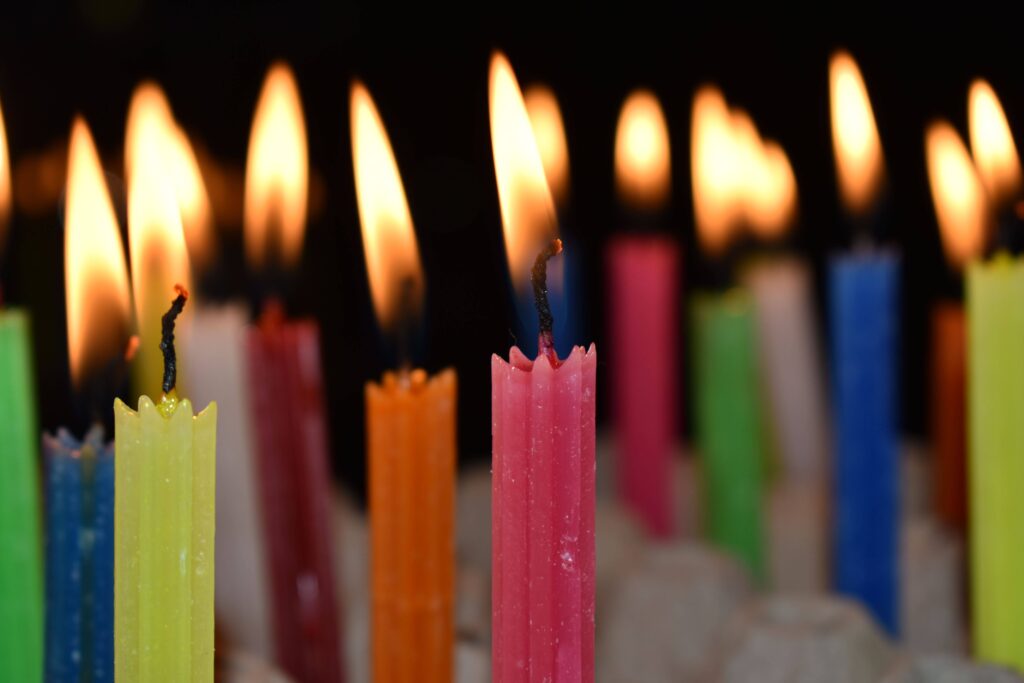
Milestone birthdays have a way of arriving with extra weight.
Thirty. Forty. Fifty. Sixty.
And then, if we are fortunate, seventy. Eighty. Perhaps more.
Each one seems to carry an invisible set of expectations. By this age, we should feel a certain way. Look a certain way. Have completed certain things. Given up others. Become settled, sensible, quieter, smaller.
I celebrated a big one last year—seventy—and realized that I had expectations about it, too
We often begin forming these expectations long before we understand what age actually feels like.
We see our mothers and grandmothers in family photographs. We remember the clothing they wore, the way they arranged their hair, the lives they were living, and the roles they occupied. We look at a photograph of a woman who was fifty-five or sixty-eight and think, She looked so much older than I feel now.
It is an unsettling realization.
Not because the women before us were old in some absolute sense, but because the visible language of age was different.
Their lives were shaped by different expectations, different freedoms, different responsibilities, and often a much narrower idea of who a woman was permitted to become after a certain point.
Many of them entered adulthood early. They raised families, cared for homes, worked inside and outside them, tended to parents, absorbed losses, and carried responsibilities that were rarely named. Their clothing, posture, expressions, and even their place within the family reflected the world in which they lived.
A woman might become “Grandma” in the eyes of everyone around her long before she had finished discovering herself.
When we look backward, we are not only seeing age.
We are seeing history.
We are seeing social expectations, limited choices, physical hardship, cultural rules, and the accumulated weight of lives that may have left little room for reinvention.
And then we arrive at those same ages.
We turn fifty, sixty, or seventy and find ourselves standing in a place that looks nothing like the one we imagined.
We may still be working, learning, creating, traveling, beginning businesses, changing our minds, making new friends, falling in love with ideas, or finally asking questions we never had time to ask before.
We may feel wiser, certainly. More selective. Less interested in performing for other people.
But we may not feel old.
That difference can be disorienting.
At seventy, I found myself looking at the women in my own family and wondering what this age had felt like to them. Did my grandmother still feel curious? Did my mother still imagine possibilities? Did they feel younger inside than the world allowed them to appear?
Perhaps they did.
Perhaps the photographs never told the whole story.
A photograph captures clothing, expression, posture, and circumstance. It does not reveal the private self. It cannot show us the girl still present inside the older woman, the ideas she never spoke aloud, or the parts of her life that remained unfinished.
This is where perspective begins to change.
Looking backward, we may need to see the women before us with greater tenderness. They were not simply older versions of ourselves. They were women becoming within the boundaries of their own time.
They may have had fewer visible pathways, but that does not mean they lacked inner lives, imagination, or longing.
Looking inward, we may need to release the belief that a milestone birthday tells us who we are supposed to be.
Seventy is not a costume we suddenly put on.
Neither is fifty, sixty, or eighty.
An age is not an identity. It is a vantage point.
From each new place on the path, we can see farther backward. We recognize patterns we could not see before. We understand our mothers and grandmothers differently. We notice what they carried, what they surrendered, and what they quietly preserved.
We also see farther inward.
We begin to understand which parts of ourselves were shaped by expectation and which parts were always our own.
Perhaps this is one of the gifts of milestone birthdays.
They ask us to pause between the woman we imagined we would be and the woman we have actually become.
The space between them is often surprising.
Sometimes it is funny. Sometimes it is tender. Sometimes it contains grief for the years that passed quickly or for the women who did not have the choices we have now.
But it also contains freedom.
We are not required to repeat the visible pattern of aging we inherited.
We can honor the women before us without becoming replicas of them.
We can carry their strength, resourcefulness, humor, and endurance forward while leaving behind the rules that told women to fade quietly into the background.
Growing older does not remove us from becoming.
It may bring us closer to it.
By the time we reach these milestone years, we have lived long enough to recognize that identity is not fixed. We have already been many women. We have crossed thresholds, changed roles, survived endings, and begun again.
And so, if you are celebrating one of these important birthdays, I wish you the happiest of days.
May you arrive there not as the woman you once thought you were supposed to be, but as the woman you are still becoming.
Why would becoming stop now?
The best may still be ahead.
Perhaps the real question is not, How old am I supposed to feel?
Perhaps it is:
From this new vantage point, what can I finally see?
And then:
What do I want to do with what I know now?
Wendy, thank you for sharing such an honest reflection. I think many women reach a season where life looks different than they once imagined, yet there is beauty in discovering that God continues to weave purpose into every chapter. Wishing you all the best as you continue building Weaver Wheel.